- Break It Down
- Posts
- The Freelancing Trap!

I started my journey as a personal trainer group coaching at an F45 here in Hong Kong back in 2017. I found after a year I had outgrown my environment and was looking for that next step.
I wanted to start taking on my own clients and making a difference on a more 1-1 basis, plus the hourly rate was higher. The problem was I could foresee the issues that where on the horizon.
When you work 1-1 with clients you end up putting a finite cap on your income, usually without realising it at the start.
Here's what I mean
• You have 7 days in a week
• 1 or 2 of those you probably want totally off, to rest and recover
In a regular 9-5 you've got 8 hours a day with a 40 hour work week.
For personal trainers that day starts to feel very extended with clients usually wanting to train around office hours
• Mornings 6-9am - 3 hours
• Lunch time 12-2pm - 2 hours
• After work - 6-9pm - 3 hours
There's your 8 hour day
Now obviously if you can target clients who are flexible throughout the day you have way more that you can fit in.
When doing the initial calculations of potential income earned, this route becomes very enticing...
However factoring in
• The toll of back to back clients
• Breaks in between sessions
• And having some sort of semblance of a life outside of 'work'
This is where the trap lies.
Even if you fill all your hours you eventually get stuck.
We sleep on average 7 hours a day, that leaves
• 17 hours in a day
• 5-6 days a week
That's all any of us really have to work with.
So the only way to start increasing your overall income working 1-1 is to start increasing your prices or filling all available time slots.
But at what point does that also become an issue?
Say you're a new PT like I was you could have your starting rate at
• $40 per 1 hour session.
[For the sake of this breakdown lets say you only have available a 40 hour work week]
That get's you to $6,400 per month
With experience you can gradually raise your prices
• $70 per 1 hour session
That get's you to $11,200 per month
But what then?
The only way to start making more is to add more hours or to keep increasing your prices. But there comes a point where the market will no longer pay for your services, as other options are available.
You also end up running around like a headless chicken filling all the available slots you can find to increase your monthly income usually to experience burnout.
What about taking a holiday or doing travel of any kind?
Once you take time off that money is taken away from your monthly total as you are not providing the service throughout that time.
The big one for me though was Injuries!
Especially as a Personal Trainer you are on your feet all day, moving weights around for your clients, and possibly running from place to place if you don't have a single location to work from.
What happens when you can't stand up for the session?
[Which is where I found myself with my spine injury]
If you can't work - You can't earn
Some injuries might be easy to work around or only take you out for a couple of days... but what about the ones that floor you for months?
I was sitting on the gym floor almost having an out of body experience as I was visualising my life unfolding as a PT and immediately I knew it wasn't for me…
Or at least not a lifestyle where I was depending on me having to show up physically to earn the dollars for the hours I was putting in.
This is where digital leverage comes in, and I feel it applies to all areas of freelancing, as we will all eventually run into the same issues.
The Cashflow Quadrant
My eyes had been opened to this idea a couple of years before when I was diving into Robert Kiyosaki's work and came across his Cashflow Quadrant from the book Rich Dad, Poor Dad.
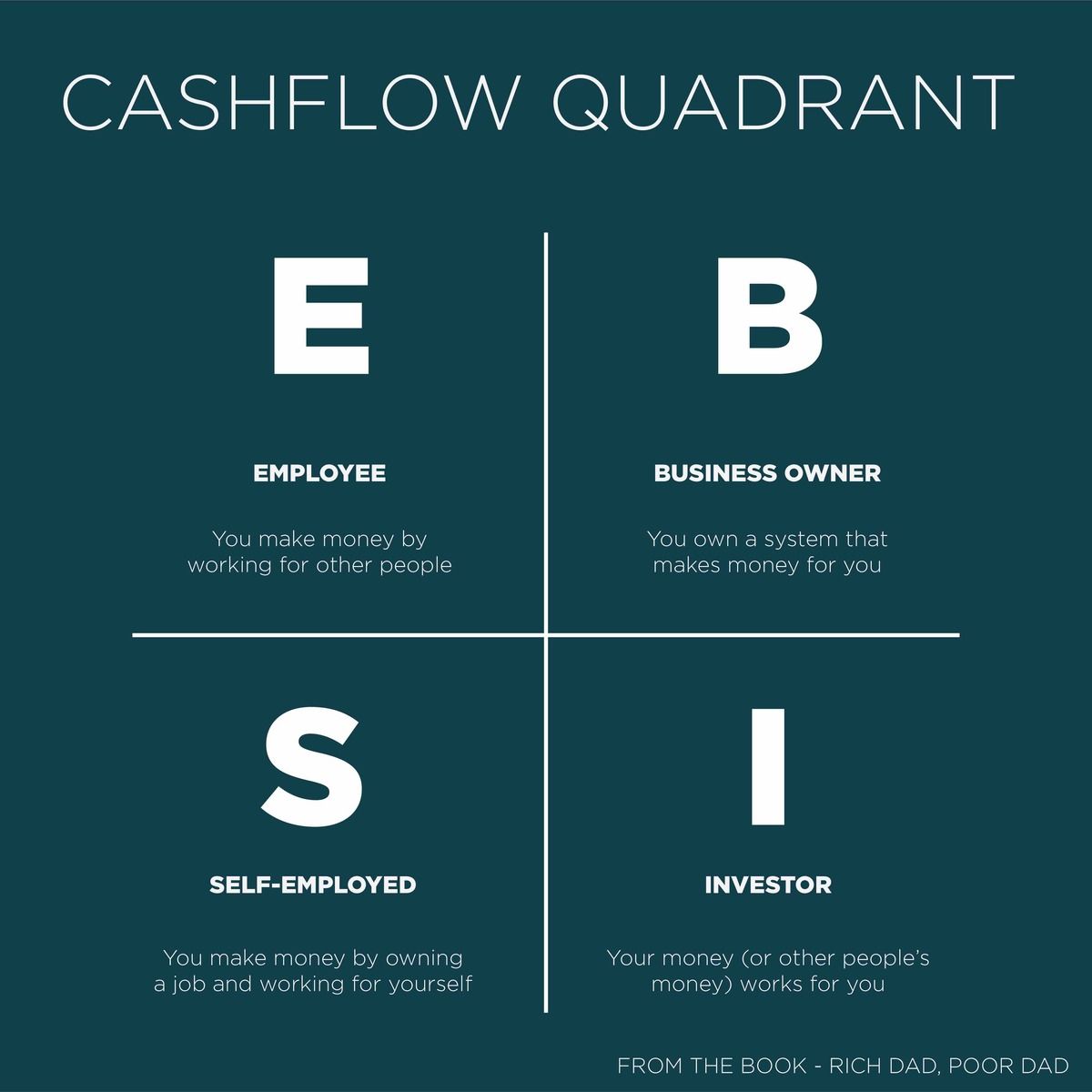
The Cashflow Quadrant is a model for understanding different types of income streams and the people who earn them. The model consists of four quadrants, labeled E, S, B, and I, which represent the four main ways that people earn money.
E - Employee
People who work for someone else and earn a salary or hourly wage fall into this quadrant.
They trade time for money and are typically subject to a boss or manager's direction.
S - Self-Employed
These are individuals who own their own business or work as independent contractors.
They may have more control over their work than employees, but they're often still trading time for money.
B - Business Owner
In this quadrant, individuals own a business that employs others to work for them.
The owner's income is derived from the business's profits, rather than from their own time.
I - Investor
This quadrant includes individuals who make money through investments in stocks, real estate, or other assets.
They earn passive income, meaning they're not actively involved in the day-to-day operations of the asset, but they still earn a return on their investment.
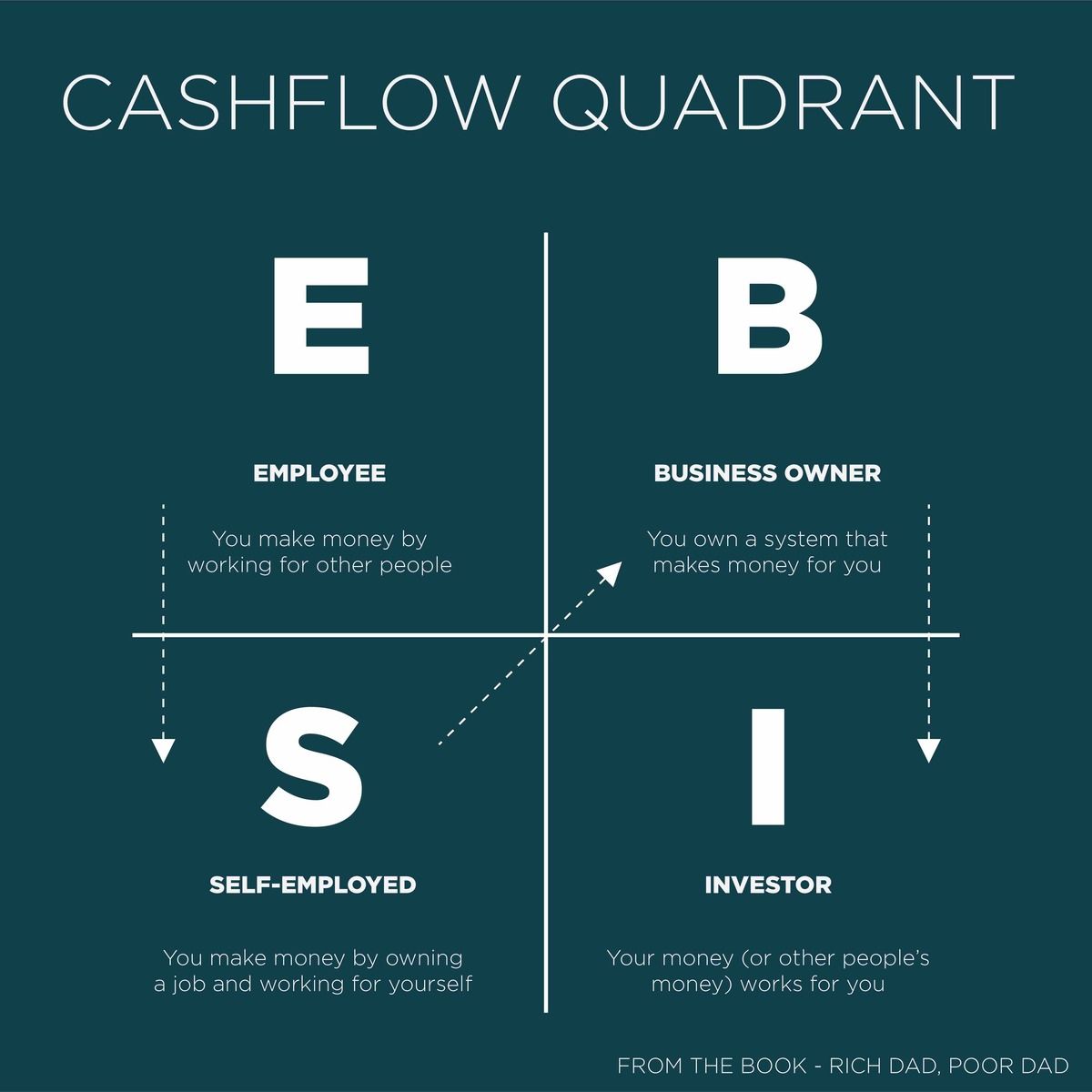
Kiyosaki's model suggests that the most financially successful people are those who are able to move from the left side of the quadrant (E and S) to the right side (B and I) where they can leverage their money and time to create passive income streams.
‘Every Single One of You is a Media Company’
In all my jobs working in the fitness industry I always gravitated towards taking over the business social media channel.
Capturing the behind the scenes, creating graphics to post and putting up stories regularly.
What I hadn't realised was organically over time, this was not only building a strong community within the gym, but also bringing new leads into the business due to increased brand awareness...
I was very naive at the time and in my head 'sales' wasn't my strong suit so I thought nothing of it.
I didn't think to track the leads coming in or even ask for a percentage of the membership sales for new sign-ups who said they had found out about us through Instagram - Lesson Learnt
I then fell into the self-employed trap once again!
In 2019 my back injury had flared up again taking me off the gym floor.
I could no longer make an income as a trainer.
What do I do now?!
Fortunately I have always had my artwork and graphic design skills to fall back on. I partnered with a friend who was trying to get his videography agency off the ground and we created a social media marketing agency for ongoing content creation, servicing small to medium sized businesses.
We saw a gap in the market for the health and wellness industry where gyms and clinics knew they needed, and most wanted an online presence but because they had no interest in creating content it was always put on the back burner.
They just wanted to focus on the services for their clients - Fair enough.
Hong Kong is one of those cities where word of mouth still holds strong and most businesses can usually get by on referrals alone, but what happens when your clients can no longer come in to use your services?
No-one saw Covid coming - and no one thought it was going to last as long as it did.
Suddenly with the closure of all gyms the fitness industry especially, realised the importance of having an online presence.
Had they not left it on the back burner for so long maybe more would have been able to weather this storm

Self-Employed
Very quickly, even as an 'agency' we were running into the same issues I could foresee building my PT clients.
There was only 2 of us.
I thought I had more control over my work, and that I was finally 'working for myself', but at the end of the day we were still trading time for money.
So eventually there was going to be a cap on how many clients we could service in a month ourselves.
I had been binge watching Gary Vee's work for many years
[Fan girl moment - I managed to go to one of his talks when he came to HK]
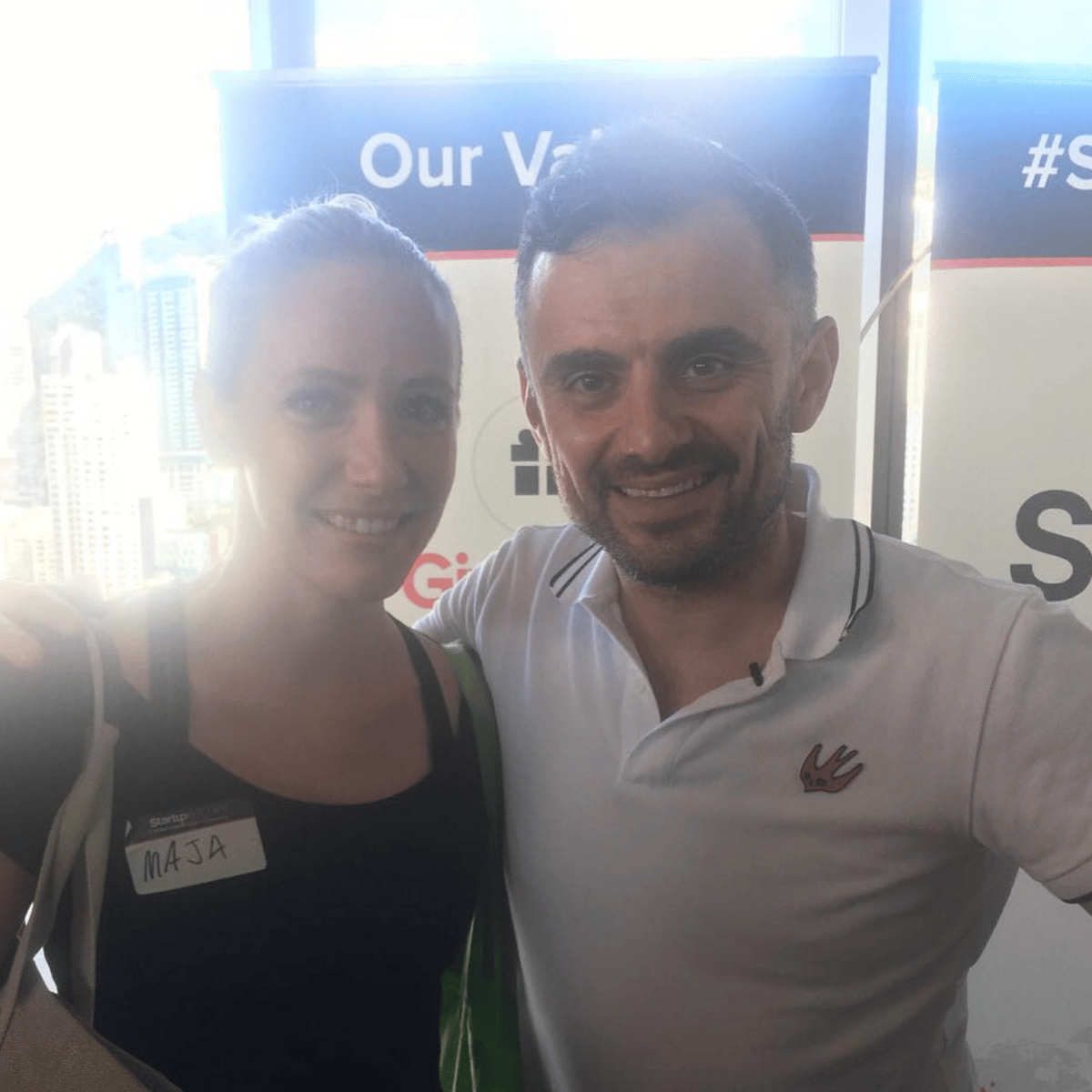
At this point, one thing he had said back in 2013 always stuck with me...

Once you have your services in place - you need to input a media team (or do it yourself) to get that message out there in order to scale.
Even Media Agencies!!
Building Systems & Digital Leverage
This relates to the self-employed portion of the quadrant, and where I see a parallel with online content creators.
When I came across Dan Koe's work this time last year it all clicked.
Building Systems and Digital Leverage
Taking the Business side of the quadrant what he teaches is that instead of employing others to work for you or your company to scale, you can create systems and digital products yourself that will do the same thing.
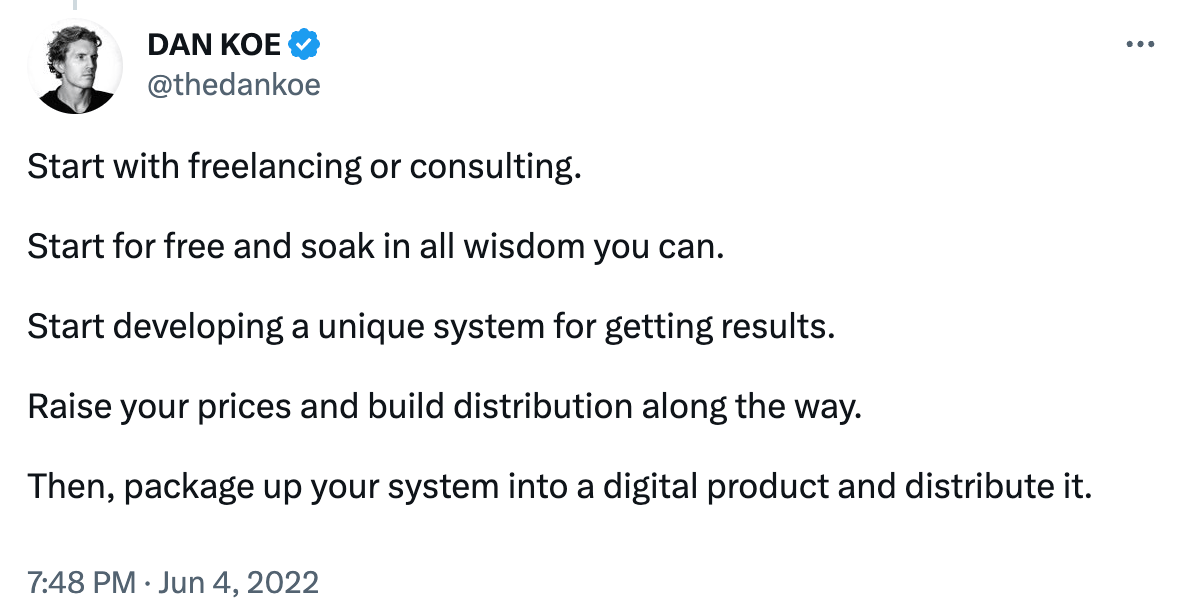
Realising after building the agency for 3 years, at that point we tried to bring on a team so we could scale. (This alone is a tough task) and I was the one left to manage it all.
I was stuck in a 9-5 hell of my own making!!
Dan’s version of the One-Person-Business method was the Golden nugget I had been trying to figure out all these years.
Balancing Now Money & Future Money
It's thrilling to finally have a grasp on your own schedule and bring in your own clients but most of us will fall into the trading time for money trap and get stuck in that Self-Employed section of the quadrant.
A little future planning can go a long way here.
There are 10 main categories we have to consider for basic needs
1. Housing
2. Utilities
3. Food
4. Transportation
5. Insurance
6. Health Care
7. Debt Repayments
8. Clothing & Personal Care
9. Childcare & Education
10. Entertainment & Recreation
This is where you can take the time to do a bit of 'Life Math' and figure out what it is you need to survive ideally within these areas.
Once you have that number you have a goal to hit when it comes to your freelance services. At the end of the day rent has to be paid and you need to put food on the table for you and your family.
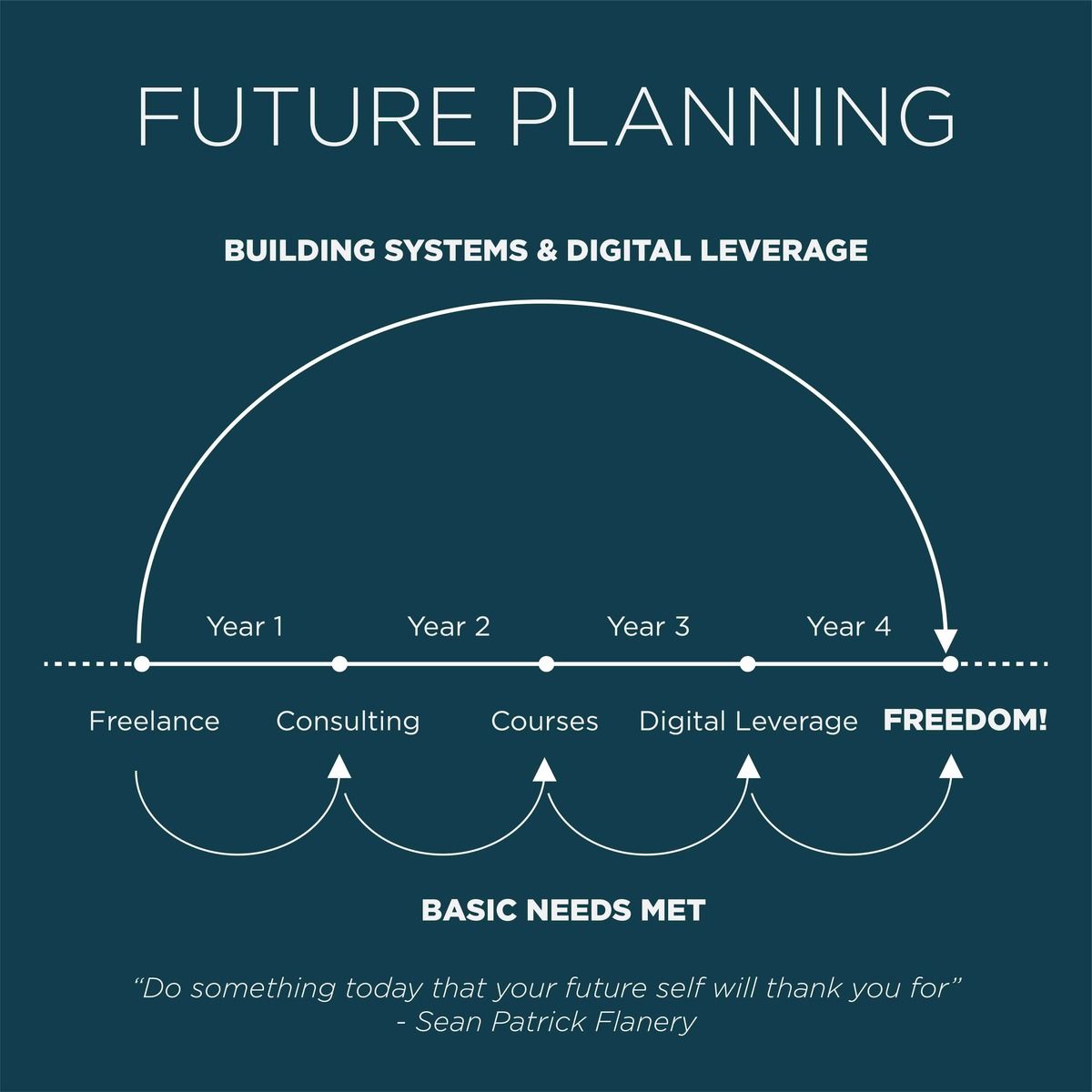
Figuring out how to get that income covered first with your freelance clients is Step 1.
Once you have found your stride with a handful of clients to cover your basic needs, you need to get better and better at servicing them within the given time as you slowly start to put in the reps.
For example with the work I do now - Ghostwriting
Writing a thread for a client used to take 3-4 hours.
I'm not proud to admit that, but we all have to start somewhere. I also have a real skill for overthinking things and will spend far too long on simple tasks.
Now with the different tools available and having put in the reps, patterns have emerged in the content I write, and I am more comfortable with writing in general.
That has been cut down to 1 hour. If that.
Slowly slowly, you will start to get some of your time back.
With that new 'free time' instead of just filling it with more clients and getting stuck again, use it to focus on the bigger picture.
Use the work you are doing with your clients to develop your own unique systems for getting results.
By this point ideally you will have been fulfilling client work for some time.
You can start to raise your prices for one. But if you look carefully at the work you are doing, notice the patterns and find a way to package it into a system and/or digital product that is Step 2.
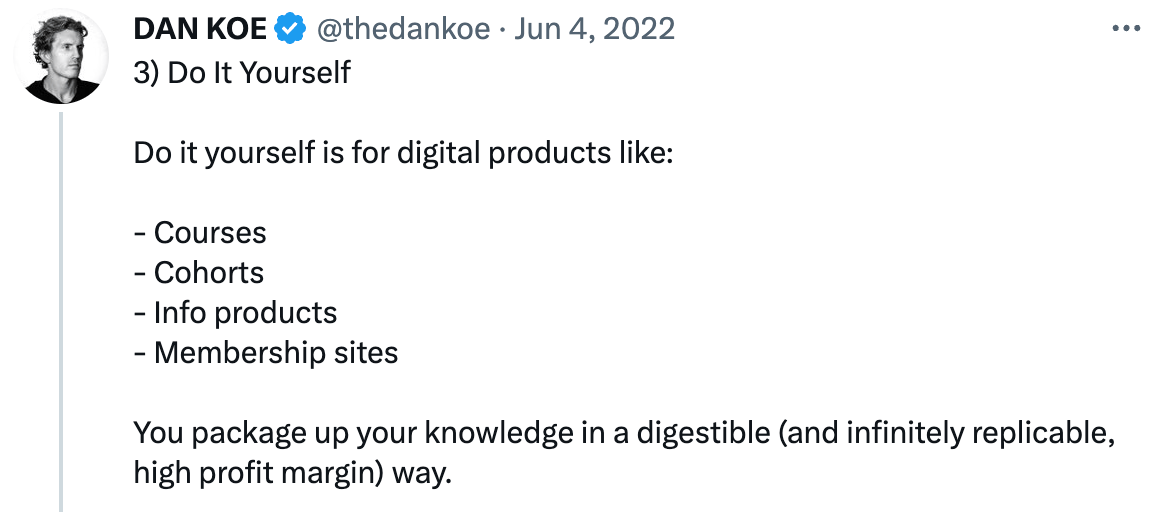
At one point while we were running the agency it became an in house joke that we were the 'ironic agency' focusing all our attention on servicing our clients and not even having our own page up and running.
Just like the gyms we were putting our own content creation on the back burner to service client needs.
I also stopped posting on my personal page about what I was doing because “I didn’t have time” - Imagine if I had just found the time to document my journey... 3 years of content that could have been stacking in my favour.
Don’t wake up 3 years from now wishing you had started today.
Don't make the same mistake I did.
Yes, building your own business and covering basic needs is paramount when starting out, but don't neglect what Dan likes to call the 'Lever Moving Tasks'.
These are the tasks that will pay massive dividends in the long run.
Playing the long term game is where the magic lies, but only if you are putting in the daily reps to reach it.
Nothing worth achieving happens over night, and I am grateful for more content creators being honest about the timeline for this process.
Financial freedom doesn’t happen in 30 days or even 6 months
Think 2 years minimum for the big goals... but be prepared, depending on where you are starting and the current time you have available, it might take longer.
So where do you go from here?
Figure out the skill set you currently have that you can monetise, or spend the time first learning new skills so you have a way to start earning Now Money whilst also building for Future Money through Systems and Digital Leverage.
Don't fall into the same traps I have.
Maja Howard